

Top 10 Cable Types and Their Uses in 2026 (Complete Buying Guide)
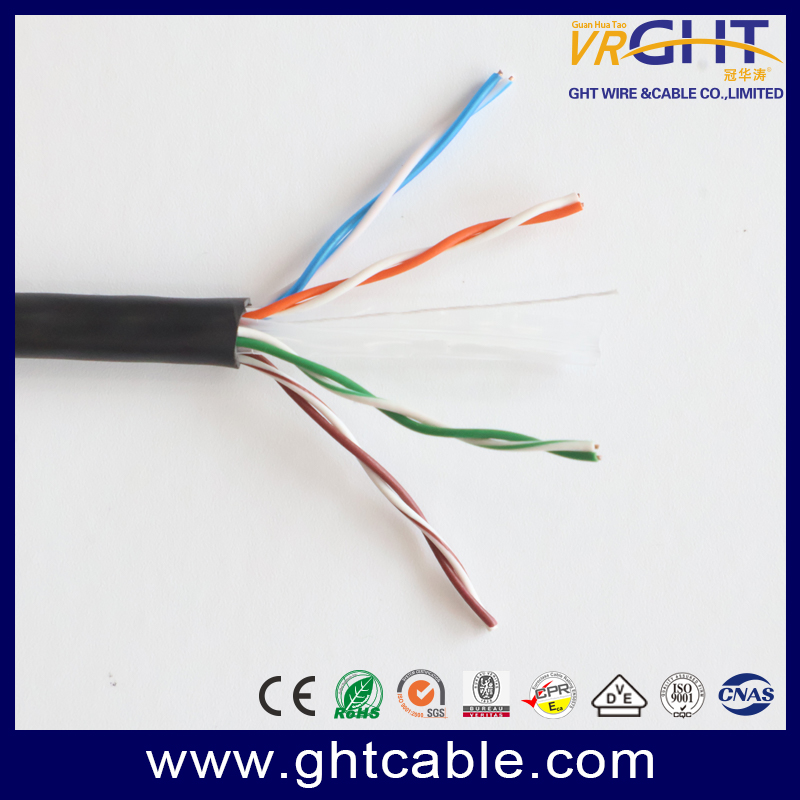
Cables remain the backbone of modern connectivity and power delivery. Whether you are setting up a home network, installing CCTV systems, wiring a commercial building, or connecting audiovisual equipment, choosing the correct cable type directly affects performance, reliability, and safety.
In this updated 2026 guide, we break down the 10 most important cable types, their real-world uses, key advantages, and practical recommendations — so you can make the right choice with confidence.
Quick Comparison Table: Top Cable Types at a Glance
|
Cable Type |
Primary Use |
Max Performance |
Best For |
Shielding |
|
Coaxial Cable |
TV, CCTV, Broadband |
RF Signal Transmission |
Long-distance video & RF |
Yes |
|
Ethernet (Cat6/Cat6A) |
Network / Internet |
Up to 10 Gbps |
Homes, offices, data centers |
Optional |
|
Fiber Optic Cable |
High-speed data |
100 Gbps+ |
Backbone, long-distance |
EMI Immune |
|
Power Cable |
Electricity distribution |
High current |
Buildings, industrial equipment |
Varies |
|
Power Cord |
Device to outlet connection |
Standard power delivery |
Appliances, computers |
Usually No |
|
HDMI Cable |
Audio + Video |
Up to 8K / 48 Gbps |
TVs, projectors, gaming |
Yes |
|
USB Cable |
Data + Charging |
Up to 40 Gbps (USB4) |
Phones, laptops, peripherals |
Optional |
|
Audio Cable (RCA/AUX) |
Sound transmission |
Analog / Digital audio |
Speakers, mixers, home theater |
Varies |
|
Telephone / Cat3 Cable |
Voice & low-speed data |
Limited |
Landlines, DSL, intercoms |
Usually No |
|
Siamese / Composite |
CCTV video + power |
Combined signal |
Security camera installations |
Yes |
1. Coaxial Cable
Coaxial cable (commonly called coax) features a central conductor, dielectric insulator, metallic shield, and outer jacket. It is still one of the most widely used cables for radio frequency (RF) signal transmission.
Main Uses:
- Cable TV and satellite connections
- Broadband internet from ISPs
- CCTV and security camera systems
- Antenna and RF applications
Key Advantages: Excellent shielding against interference and reliable performance over long distances.
Recommended Products: RG6 Coaxial Cable | RG59 Coaxial Cable
2. Ethernet Cable (Network Cable)
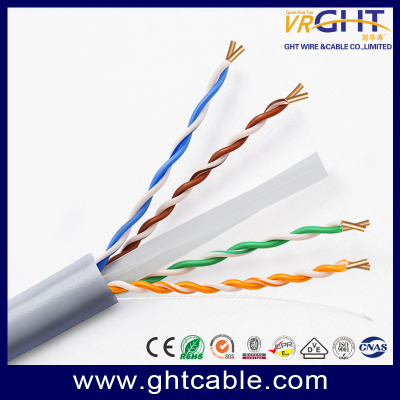
Ethernet cables are the foundation of wired local area networks (LANs). The most common categories in 2026 are Cat6 and Cat6A.
Main Uses:
- Home and office internet connections
- Data centers and server rooms
- Gaming, streaming, and video conferencing
- Power over Ethernet (PoE) devices
Quick Recommendation (2026):
- Most homes & small offices → Cat6
- Future-proof or high-performance networks → Cat6A
Related Reading: Cat6 vs Cat6A vs Cat7 Guide
3. Fiber Optic Cable
Fiber optic cables transmit data using light signals through glass or plastic strands, delivering extremely high bandwidth and long-distance performance with zero electromagnetic interference.
Main Uses:
- Internet backbone and telecom networks
- Data centers
- Campus and long-distance links
- High-reliability industrial applications
Fiber is the preferred choice when speed, distance, and future scalability matter most.
Explore: Fiber Optic Cables
4. Power Cable
Power cables are designed to safely carry electrical current from the source to equipment or distribution systems. They vary by voltage rating, conductor material, and insulation type (PVC, XLPE, rubber, etc.).
Main Uses:
- Residential and commercial building wiring
- Industrial machinery
- Underground and overhead power distribution
Choosing the correct cross-section and insulation is critical for safety and compliance.
Related Products: Power Cables
5. Power Cord
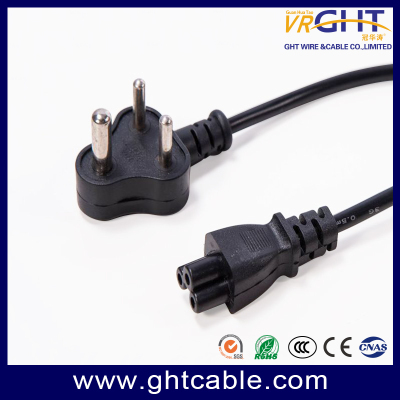
A power cord is a flexible cable with a plug that connects devices and appliances to the mains power supply. Different countries use different plug standards (Type A, C, G, I, etc.).
Main Uses:
- Computers, monitors, and printers
- Household appliances
- Industrial equipment and machinery
Always select certified power cords that match local safety standards.
Browse: Power Cords
6. HDMI Cable
HDMI (High-Definition Multimedia Interface) cables transmit both high-quality video and audio signals through a single connection.
Main Uses:
- TVs, monitors, and projectors
- Gaming consoles and media players
- Home theater systems
- Professional AV setups
In 2026, HDMI 2.1 cables supporting 8K and high refresh rates are becoming the standard for high-end applications.
7. USB Cable
USB cables handle both data transfer and power delivery. USB-C has become the universal standard across phones, laptops, and peripherals.
Main Uses:
- Smartphone and laptop charging
- External storage devices
- Peripherals (keyboards, printers, cameras)
- High-speed data transfer (USB 3.2 / USB4)
Tip: For fast charging and high data speeds, always choose quality USB-C cables with proper certification.
8. Audio Cable (RCA, AUX, Optical)
Audio cables carry analog or digital sound signals between devices.
Common Types:
- RCA cables (red/white or red/white/yellow)
- 3.5mm AUX cables
- Optical (Toslink) digital cables
Main Uses:
- Speakers and amplifiers
- Home theater systems
- Professional audio equipment
- Car audio systems
Related Guide: Everything About RCA Cables
9. Telephone Cable (Cat3 / Twisted Pair)
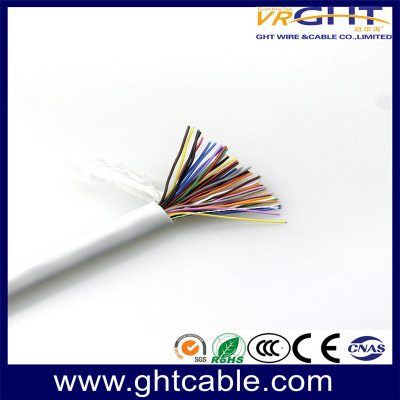
Although mobile networks dominate, telephone cables (often Cat3) are still used for traditional voice services, DSL connections, and certain intercom systems.
Main Uses:
- Landline telephone systems
- DSL broadband
- Intercom and low-speed data applications
10. Siamese / Composite Cable
Siamese cable (also called composite cable) combines a coaxial cable and a power cable in one jacket. It is extremely popular in CCTV installations.
Main Uses:
- CCTV and security camera systems
- Combined video + power transmission
- Simplified installation for surveillance projects
Learn More: What is a Siamese Cable?
Why Choosing the Right Cable Matters
Using the wrong cable can result in:
- Reduced speed or signal quality
- Interference and data loss
- Safety hazards (especially with power cables)
- Costly rework and downtime
Always match the cable type, specification, and certification to your exact application.
Frequently Asked Questions (FAQ)
Q: What is the most common cable type used today?
A: Ethernet (Cat6/Cat6A) and coaxial cables remain the most widely used in homes and commercial projects.
Q: Is fiber optic better than copper Ethernet?
A: For long distances and maximum speed, yes. For most standard office and home networks, high-quality Cat6A is still more cost-effective.
Q: What cable should I use for CCTV cameras?
A: Siamese (RG59 + power) or RG6 coaxial cable are the most common choices.
Q: Do I still need coaxial cable for internet?
A: Many ISPs still use coaxial for the final connection into the home (DOCSIS), although fiber-to-the-home is growing rapidly.
Q: Cat6 or Cat6A — which should I choose in 2026?
A: Cat6 is sufficient for most users. Choose Cat6A if you want full 10Gbps support up to 100 meters or are installing for the long term.
Looking for Reliable Cable Solutions?
At VRGHT (GHT Cable), we manufacture and supply a full range of high-quality cables for network, coaxial, power, fiber, and specialty applications. All products are produced under strict quality control and meet international standards.
Explore Our Popular Categories:
Need a custom solution or bulk quotation? Contact us today — our team is ready to help.


发表评论